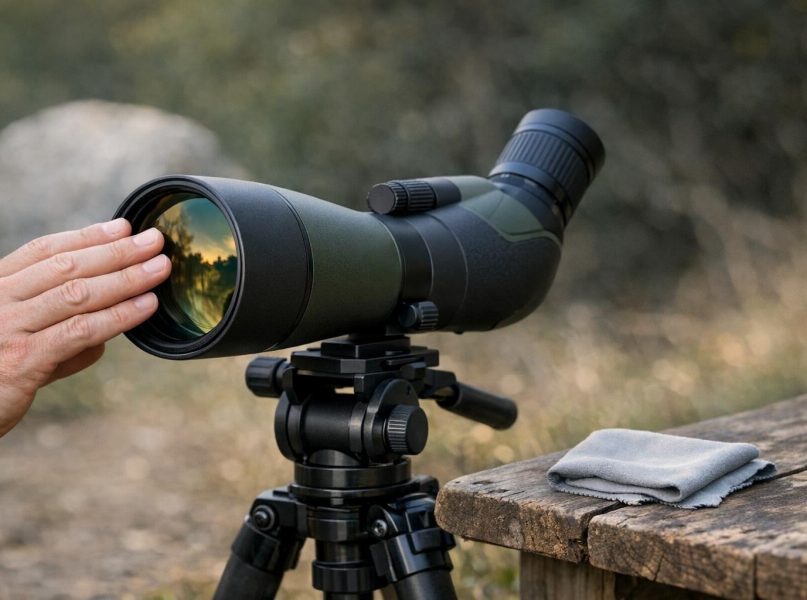
Some scopes, binoculars and other optical devices have a colored cast to their image. This could be a design feature of the lens, but it can also make the view appear dull. A good lens tint can help to distinguish between your subject and the background but a bad one can have the opposite effect and make the image appear washed out or even appear to be in reverse. Many people compare the optical devices they are looking at purchasing for sport by comparing the darkest lens or the most colored. However, lens tint is affected by the light that is being viewed with and how the tint looks in artificial light does not necessarily mean how it will look in real light.
What lens tint changes in a real view
Tint (color) influence caused by the glass, by coatings and even by filters within an optical system. A rather subtle color influence can easily be perceived as changing the scene in front of us. The tint influence affects the balance of all wavelengths of light, thus it influences the overall brightness and the contrast of the scene in front of us. A brown/amber tint for example can make certain objects in the scene in front of us appear more clearly contrasted against a dull background. A neutral gray tint on the other hand will not change the way we perceive the scene in front of us.
To affect brightness and contrast, a lens tint must balance the wavelengths of light that pass through the glass. The same tint can render object tones strongly and a background weakly, making it appear dark. In contrast, a lens with a neutral gray tint will render both background and object roughly equally brightly. A brown or amber tint can render object tones strongly against a very muted background.
Therefore, it is not sufficient to compare the front end of the glass. The whole optical path must be taken into account: the objective lenses, the oculars, protective filters, display and electronic processing etc. All these components affect the image that is perceived by the human eye and thus must be taken into account when comparing products with apparently similar glass.
Match the tint to the light conditions
Most importantly, consider where you are going to use the scope/binoculars and under what lighting conditions. If you will be using the scope/binoculars mostly in very bright open areas, in heavily wooded shaded areas, on overcast days, etc. then the image produced by the scope/binoculars will be different under these different lighting conditions.
The color of surrounding light, the color of the object being viewed and the contrast of the background all have to affect how the scope appears when viewed in different locations. It is quite possible for a scope to appear very bright in a well-lit room but appear dull under tree cover.
For Night Vision, images are normally rendered in black and white. Some NV scanners introduce false colors to the image, which can be highlighted in the scope's performance data. Check for even illumination of the scene, clear definition of edges and whether the image remains constant in all lighting conditions. Follow the manufacturer's instructions and check for current local restrictions when testing such specialized equipment.
Separate useful contrast from lost detail
The reduction of image brightness does not automatically result in better contrast. On the contrary, very dark images can also have less contrast, since small differences in brightness or color are not perceived.
Test the optical system on a familiar object against a number of different backgrounds. This is a far better test than looking at a white wall. For example, test a dark object against a foliated background, a pale object against open country, and a speckled surface against dappled shade. Can the edges be seen to clearly, and are all the fine details visible?
However, when a tint is affecting the view, a good optical product should not make neutral surfaces appear greatly altered. A good image should not appear to be sharper solely due to it being darker. Check the view in different lighting before giving credit to a perceived improvement in image sharpness.
Simple checks before blaming the glass
Most apparent color problems are outside of the optical system itself. Simple smudges of fingerprints, or even drying moisture, can scatter light in strange ways and present a 'hazed' appearance that is so much worse than a simple gray wash. In most cases a simple wipe with a soft lens cleaning tissue will remove such marks. Always use the method of cleaning as recommended by the manufacturer, and make sure to keep any loose grit away from the coatings.
Ensure that the image is focused to the sharpest point. Work with the focus set for your eyes and if the scope has separate focus controls for eye(s) then work with these set for your eyes rather than altering theocular contact point in a crude and time wasting manner. For binoculars check that the interpupillary distance is set for your eyes and that individual eye settings are correct.
Left and right channels (if the scope has them) should also appear to be about the same brightness and color. Also test viewing the scene from different angles and check if the glare or 'dinginess' appears to move with the observer. External glint can move whereas internal defects will remain in the same position.
Warning signs that should not be ignored
Changes to the tint of the image over time, no matter how gradual, can be difficult to spot as our vision continues to adapt to the new 'normal'. On the other hand, sudden appearance of yellow, purple or green patches, a spread of cloudy, deteriorating or festering area, or repeated internal fogging up or formation of a ring around the central area of the image after cleaning can all be recognized as a problem almost immediately.
Another important factor to note is that many of our night vision scopes are sealed to be weather proof and should not be opened under any circumstances. Although it may seem obvious that it is a good idea to clean your scope after it has been exposed to the elements, this could in fact cause more problems and result in the scope becoming damaged. A simple rule of thumb to follow is to keep your scope clean and dry at all times.
Don't try to clean coat scratches with polish, attempt to take apart a sealed scope or attach un-tested optical filters. Minor surface marks on outer lenses may be cosmetic but could affect appearance. However, scratches, dirt or damage across the image field, looseness of internal parts or the need for realignment all have potential to cause problems and should be assessed by a qualified optics technician as soon as possible.
Compare optics by use, not showroom appearance
In comparing different optics make a note of the viewing conditions (light etc) that you observed the optic under, note the background, the subjects color(s) and the duration that you were able to view the image comfortably. It is also worth looking at the optic under low and high magnification. Various things can be revealed when viewing an optic under different magnifications, such as focus, glare and contrast.
This creates the issue of what sort of visual contrast is useful. The subject under view, and the background against which the subject is viewed, will both impact on this choice. If the observer is trying to distinguish between very dark objects then a darker background may help. On the other hand if the objects of interest are pale then a very light background may improve visibility. And if viewing objects of texture then a medium gray background may be best.
Maintenance. Make sure you clean the lenses before each use. Use protective caps where provided. Store your optics in a dry, cool, roomy space – as the manufacturer of your device suggests. Note any change in tint and date it. That helps you tell the difference between a dirty glass and a fault that will need fixing by a professional.
A tint that is useful is one that is consistent, useful and comfortable in viewing. It should be viewed against a comparison of the instrument's contrast, detail, glare and color for viewing under various light conditions and then treated as a fault should any of these vary from normal viewing.